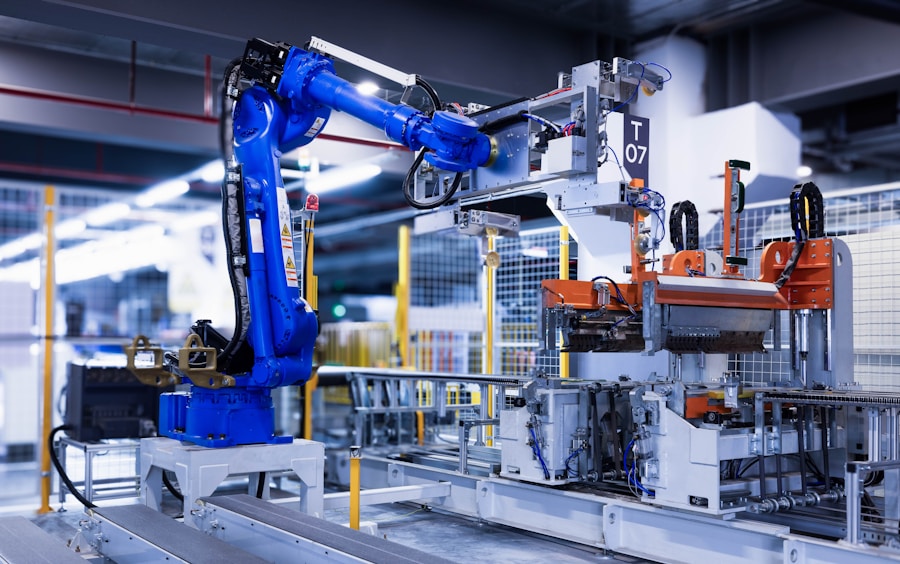
You’re curious about how Artificial Intelligence (AI) goes from being a brilliant idea to creating tangible, positive change in the real world. That’s a great question, and the answer lies in smart, well-executed implementation strategies. This article dives into how businesses and organizations are successfully bringing AI into their operations, moving beyond the whiteboard and into the engine room of innovation. We’ll look at concrete examples, exploring the “how” and “why” behind their triumphs, so you can see the power of AI in action.
The Foundation: Understanding Your Problem Before You Build
Before AI can be a tool, it needs a purpose. Many successful AI projects begin not with a flashy technology demonstration, but with a clear understanding of a specific problem or opportunity. Think of it like preparing the soil before planting a valuable seed. If you don’t know what you want to grow, any seed will do, and the results are likely to be a tangled mess.
Identifying Pain Points and Opportunities
The first crucial step is to pinpoint exactly where AI can make a difference. This means looking for repetitive tasks that drain human resources, processes prone to human error, or areas where insights are hidden within vast amounts of data.
Quantifying the Impact of the Problem
It’s not enough to say “we have a problem.” For AI to be justified, the problem’s impact needs to be quantified. This could be in terms of lost revenue, increased operational costs, decreased customer satisfaction, or missed market opportunities. For instance, a company struggling with high customer churn might measure the percentage of customers lost annually and the associated revenue impact.
Defining Clear, Measurable Objectives for AI
Once a problem is identified and its impact understood, the next step is to set specific, measurable, achievable, relevant, and time-bound (SMART) goals for the AI solution. These objectives act as the lighthouse guiding your AI journey.
The “Why” Behind the “What”: Strategic Alignment
AI implementation isn’t just about deploying technology; it’s about aligning that technology with overarching business strategy. A tool is only as good as the job it’s intended to do.
Translating Business Goals into AI Use Cases
For example, if a company’s strategic goal is to improve customer loyalty, an AI use case might be to build a personalized recommendation engine that suggests products individual customers are most likely to purchase.
Ensuring Executive Sponsorship and Buy-In
Without support from leadership, even the most brilliant AI initiative can wither on the vine. Executives need to understand the strategic value and be champions for the project, allocating resources and clearing organizational hurdles.
Building Blocks: Data Quality and Infrastructure
AI systems are ravenous learners, and their education depends entirely on the quality of the data they consume. You can’t paint a masterpiece with muddy pigments. Ensuring clean, well-structured, and accessible data is paramount.
The Cornerstone: High-Quality Data
The adage “garbage in, garbage out” is especially true for AI. If the data fed into algorithms is inaccurate, incomplete, or biased, the AI’s outputs will reflect those flaws.
Data Collection and Preparation Strategies
This involves developing robust processes for collecting data from various sources, cleaning it to remove errors and inconsistencies, and transforming it into a format suitable for AI models. This might include tasks like standardizing units, imputing missing values, and de-duplicating records.
Addressing Data Biases and Ensuring Fairness
A significant challenge is ensuring that the data used doesn’t perpetuate existing societal biases. This requires careful auditing of datasets and implementing techniques to mitigate bias, leading to fairer and more equitable AI outcomes.
The Engine Room: Robust Infrastructure
AI models, especially complex deep learning ones, require significant computational power and efficient data pipelines. This is where the underlying infrastructure plays a critical role.
Cloud Computing and Scalability
Cloud platforms offer the elasticity needed to handle the fluctuating demands of AI training and deployment. They allow organizations to scale their resources up or down as needed, proving much more cost-effective than managing on-premises hardware for intensive AI workloads.
Data Warehousing and Lake Solutions
Modern AI often requires access to diverse datasets. Data lakes and warehouses provide centralized repositories that can store and manage large volumes of structured and unstructured data, making it readily available for AI analysis.
Iterative Development: From Proof of Concept to Production
The journey of AI implementation is rarely a straight line. It’s more of a winding path with checkpoints, learning opportunities, and adjustments along the way. A phased approach, starting with a manageable Proof of Concept (PoC), is a common and effective strategy.
The Power of Proof of Concept (PoC)
A PoC is a small-scale experiment designed to test the feasibility of an AI solution for a specific problem. It’s about proving that the core idea works before investing heavily in a full-scale rollout.
Defining the Scope and Success Criteria for a PoC
Clearly defining what the PoC aims to achieve and how success will be measured is critical. This prevents scope creep and ensures that the PoC delivers actionable insights. For example, a PoC for an AI-powered fraud detection system might aim to achieve a certain accuracy rate in identifying fraudulent transactions within a defined time period.
Prototyping and Early Testing
PoCs involve building minimal viable AI models and testing them on a representative subset of data. This allows for early identification of potential issues and areas for improvement.
Scaling Up: Bridging the Gap to Production
Successfully transitioning from a PoC to a production-ready AI system requires careful planning and execution. It’s about taking what you’ve learned and building a robust, reliable, and maintainable solution.
Model Deployment and Integration
This involves deploying the trained AI model into the production environment where it can interact with real-time data and deliver value. This often requires integrating the AI with existing IT systems and workflows. Think of it as connecting a new, highly skilled employee to the company’s established communication channels and task management systems.
Monitoring and Performance Management
Once deployed, AI systems need continuous monitoring. This ensures they are performing as expected, identifies drift in model performance (where the AI’s accuracy degrades over time as data patterns change), and triggers necessary retraining or updates.
Real-World Wins: Case Studies in Success
Seeing how others have navigated the AI implementation landscape can be incredibly illuminating. These examples showcase different industries and diverse applications of AI, offering practical lessons.
Revolutionizing Customer Service with Conversational AI
Many companies are using AI-powered chatbots and virtual assistants to handle customer inquiries. This frees up human agents for more complex issues and provides customers with instant support 24/7.
Example: A Telecommunications Giant’s Chatbot Implementation
A large telecommunications company invested in an AI chatbot that could answer hundreds of common customer questions about billing, service outages, and plan upgrades. This chatbot was trained on years of customer interaction data, including chat logs, email transcripts, and FAQs.
Key Strategy: Gradual Rollout and Human Hand-off
The chatbot was initially rolled out to a small segment of customers and its performance closely monitored. A crucial element was the seamless hand-off to a human agent when the chatbot encountered a query it couldn’t resolve, ensuring customer frustration was minimized. The AI learned from these hand-offs, continuously improving its ability to answer questions independently.
Measurable Outcome: Reduced Call Volume and Improved Customer Satisfaction
The result was a significant reduction in call volume to human agents, allowing them to focus on more complex and high-value interactions. Customer satisfaction scores related to initial support interactions saw a notable improvement due to the speed and availability of the chatbot.
Streamlining Operations with Predictive Maintenance
Industries with heavy machinery, like manufacturing and transportation, are leveraging AI for predictive maintenance. This involves using sensors and AI algorithms to forecast when equipment is likely to fail, allowing for proactive repairs.
Example: An Airline’s Engine Health Monitoring System
An airline implemented an AI system that continuously monitors sensor data from its aircraft engines. This data includes factors like temperature, pressure, vibration, and oil levels. The AI analyzes these real-time streams and historical maintenance records to predict potential component failures before they occur.
Key Strategy: Sensor Data Fusion and Anomaly Detection
The AI’s success hinges on its ability to fuse data from multiple sensors and identify subtle anomalies that might go unnoticed by human inspection. The system identifies patterns that historically precede failures, such as slight increases in vibration or temperature fluctuations outside the normal operating range.
Measurable Outcome: Minimized Downtime and Reduced Maintenance Costs
By identifying potential issues early, the airline can schedule maintenance during planned downtime, preventing costly in-flight system failures and reducing unscheduled maintenance. This not only boosts operational efficiency but also enhances passenger safety and reduces the overall cost of maintenance.
Enhancing Medical Diagnostics with AI-Powered Imaging Analysis
The medical field is increasingly adopting AI to assist in interpreting medical images like X-rays, CT scans, and MRIs. AI algorithms can help detect subtle abnormalities that might be missed by the human eye, leading to earlier and more accurate diagnoses.
Example: A Radiology Department’s AI for Cancer Detection
A hospital’s radiology department implemented an AI system designed to assist in the early detection of lung nodules in CT scans, a common indicator of lung cancer. The AI was trained on a massive dataset of anonymized CT scans labeled by expert radiologists.
Key Strategy: Collaboration Between AI and Radiologists
Crucially, this AI was not designed to replace radiologists but to augment their capabilities. It acts as a second pair of eyes, flagging areas of potential concern for the radiologist to review. The AI highlights suspicious nodules and provides a confidence score for its assessment.
Measurable Outcome: Improved Detection Rates and Faster Reporting
This human-AI collaboration led to statistically significant improvements in detection rates for early-stage lung cancer. It also reduced the time it took for radiologists to review scans, enabling faster reporting of results to patients and clinicians, which can be critical for timely treatment.
Optimizing Supply Chains with AI-Driven Forecasting
Across industries, the ability to accurately predict demand is a competitive advantage. AI-powered forecasting models can analyze historical sales data, market trends, and even external factors like weather and social media sentiment to provide more precise demand predictions, acting as the compass for the complex logistics of a supply chain.
Example: A Retailer’s Demand Forecasting System
A major retail chain implemented an AI system to forecast demand for thousands of its products across hundreds of stores. The AI integrated data from point-of-sale systems, inventory levels, promotional calendars, and external economic indicators.
Key Strategy: Granular Forecasting and Multi-Factor Analysis
Unlike traditional forecasting methods that might focus on broad categories, this AI system provided highly granular forecasts, predicting demand for individual SKUs at specific store locations. It also incorporated a wider array of influencing factors, providing a more nuanced understanding of market dynamics.
Measurable Outcome: Reduced Inventory Costs and Increased Sales
The improved forecasting accuracy led to a significant reduction in both overstocking (leading to lower inventory holding costs and less waste) and stockouts (resulting in fewer lost sales opportunities). This optimization streamlined the entire supply chain, from procurement to distribution.
Personalizing User Experiences with Recommendation Engines
E-commerce and streaming services often use AI-powered recommendation engines to suggest products or content that users are likely to enjoy. These engines learn from user behavior, preferences, and the behavior of similar users.
Example: A Streaming Service’s Content Recommendation Algorithm
A popular streaming service developed an AI recommendation engine that analyzes a user’s viewing history, ratings, and even the time of day they watch content. It compares this data to the viewing patterns of millions of other users to suggest movies and shows that are highly likely to appeal to them.
Key Strategy: Collaborative Filtering and Content-Based Filtering
The engine utilizes a combination of collaborative filtering (finding users with similar tastes) and content-based filtering (recommending items similar to what the user has liked before) to create personalized discovery experiences.
Measurable Outcome: Increased User Engagement and Retention
The effectiveness of the recommendation engine is directly linked to increased user engagement, meaning users spend more time on the platform discovering and consuming content. This, in turn, leads to higher user retention rates, a critical metric for subscription-based services.
The Human Element: Collaboration and Continuous Learning
| Company | AI Implementation Strategy | Success Metrics |
|---|---|---|
| Amazon | Personalized recommendations, supply chain optimization | Increased sales, improved customer satisfaction |
| Netflix | Content recommendation, content optimization | Higher user engagement, reduced churn rate |
| Search algorithms, ad targeting | Improved search accuracy, higher ad conversion |
While AI can automate tasks and uncover insights, the most successful implementations recognize that AI is a tool that works best when humans are part of the equation. The human-AI partnership is where the real magic happens.
Augmenting Human Capabilities, Not Replacing Them
Many AI successes stem from using AI to empower human workers, not to make them obsolete. AI can handle the tedious, repetitive, or data-intensive aspects of a job, allowing humans to focus on higher-level thinking, creativity, and critical decision-making.
Training and Upskilling the Workforce
As AI is integrated into workflows, it’s essential to train employees on how to use and interact with these new tools. This might involve teaching them how to interpret AI outputs, how to provide feedback to AI systems, or how to leverage AI to enhance their own performance.
Fostering a Culture of Experimentation and Learning
The AI landscape is constantly evolving. Organizations that thrive are those that cultivate a culture where experimentation is encouraged, and continuous learning is a priority. This means being open to trying new AI approaches, learning from failures, and adapting strategies as new technologies emerge.
The Ethical Compass: Responsible AI Implementation
As AI becomes more powerful, the ethical implications of its use become increasingly important. Successful AI implementation strategies prioritize responsible development and deployment.
Transparency and Explainability
Where possible, understanding why an AI makes a certain decision is crucial. This “explainable AI” (XAI) is vital for building trust, debugging issues, and ensuring accountability.
Continuous Auditing and Bias Mitigation
Regularly auditing AI systems for unintended biases or discriminatory outcomes is not just good practice; it’s a necessity for ethical AI. This involves ongoing monitoring and refinement to ensure fairness.
By moving from theory to practice with a clear understanding of the problem, a robust data foundation, an iterative development approach, and a focus on human-AI collaboration, organizations are unlocking the transformative power of AI. These real-life examples demonstrate that successful AI implementation is not just about cutting-edge technology, but about thoughtful strategy and execution.
FAQs
What is AI implementation?
AI implementation refers to the process of integrating artificial intelligence technologies and solutions into existing business operations or systems to improve efficiency, productivity, and decision-making.
What are some real-life examples of successful AI implementation strategies?
Some real-life examples of successful AI implementation strategies include using AI-powered chatbots for customer service, implementing machine learning algorithms for predictive maintenance in manufacturing, and utilizing natural language processing for sentiment analysis in marketing.
What are the benefits of AI implementation in business?
The benefits of AI implementation in business include improved operational efficiency, enhanced decision-making through data analysis, cost savings through automation, and the ability to offer personalized customer experiences.
What are some challenges of AI implementation?
Challenges of AI implementation include the need for skilled AI talent, data privacy and security concerns, ethical considerations, and the potential for job displacement due to automation.
How can businesses effectively implement AI strategies?
Businesses can effectively implement AI strategies by clearly defining their objectives, investing in the right AI technologies, ensuring data quality and accessibility, providing training for employees, and continuously evaluating and adjusting their AI implementation strategies.